
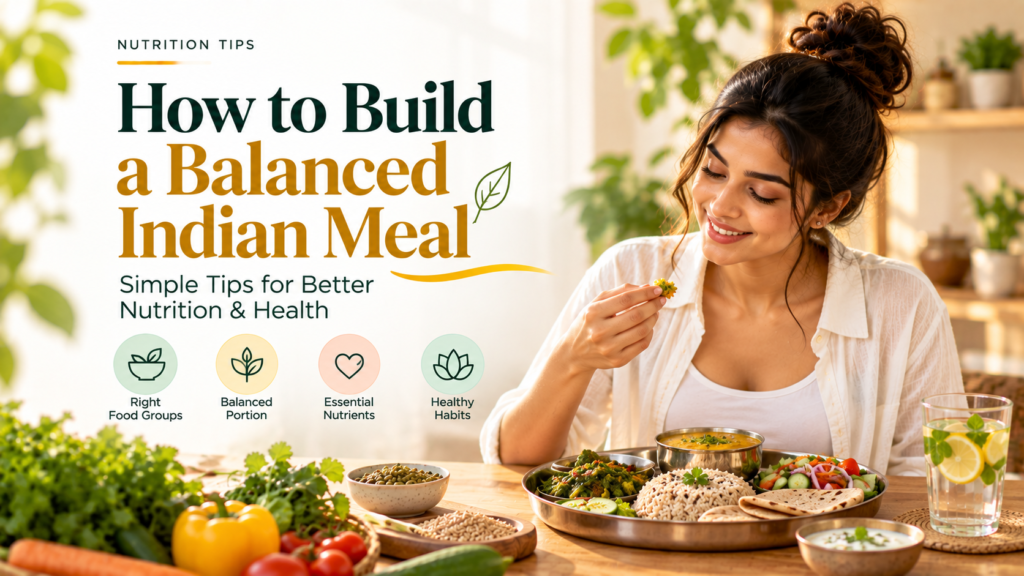
How to Build a Balanced Indian Meal
Indian cuisine offers an incredible variety of foods.
From dal and vegetables to roti, rice, curd, paneer, fruits, nuts and spices, there are countless ways to create nutritious meals.
Healthy eating does not mean abandoning Indian food.
It means learning how to build balanced meals using foods you already enjoy.
Start With Vegetables
Try to include vegetables regularly.
You can choose:
- Seasonal vegetables
- Leafy greens
- Salads
- Mixed vegetables
- Soups
- Other plant foods
Variety matters.
Add a Protein Source
Depending on your preferences, this could include:
- Dal
- Rajma
- Chole
- Beans
- Paneer
- Curd
- Eggs
- Fish
- Chicken
- Tofu
Protein needs vary from person to person.
Include Carbohydrates
Rice, roti, millet, oats and other grains can be part of a balanced diet.
Carbohydrates are not automatically unhealthy.
The overall meal pattern and portion are important.
Add Healthy Fats
Nuts, seeds and suitable cooking oils can contribute healthy fats.
But remember that fats are energy-dense, so portions still matter.
Don’t Fear Spices
Indian cooking uses a wonderful variety of herbs and spices.
Spices can make nutritious meals enjoyable without relying entirely on highly processed sauces.
What About Roti and Rice?
You don’t necessarily need to choose one forever.
Both can fit into a balanced eating pattern.
The amount that suits you depends on your individual needs, meal composition and overall lifestyle.
Make Your Plate Practical
A simple meal could include:
Vegetables + protein-rich food + grain/starch + suitable healthy fat
For example:
Dal + sabzi + roti + salad
or
Rajma + rice + vegetables + curd
The exact combination can change according to your preferences.
Final Thoughts
Healthy Indian eating does not require completely changing your cuisine.
Use familiar foods, focus on variety and balance, and create meals that you can enjoy consistently.
